Origin of the Museum of All the Things We've Loved
In 2016, John Jeff Hutter's father died by suicide. Months later, he found decades of his father's journals hidden in a secret compartment of a filing cabinet in his father's office. Reading them began a nearly decade-long journey of getting to know his father, and in turn himself. John Jeff made sense of it through writing, and over the years that writing grew into his book, Gutsy Grief: Turning Loss Into Self-Discovery.
When he shared his story at a community storytelling event in Austin, a woman shared with him afterward that she had also lost someone she loved to suicide, but her family had decided they wouldn't talk about it, and hearing John Jeff speak so openly about his dad's death helped her.
Sharing the book taught John Jeff something he didn't expect: when one person speaks openly about loss, it invites others to do the same. The Museum of All the Things We've Loved is built on that multiplier effect, a museum created through the participation of the community it serves.
John Jeff Hutter opens the Museum of All the Things We've Loved in August 2026.
What is the Museum of All the Things We've Loved?
It’s a pop-up museum of personal objects and original artwork inspired by loss, shown alongside the stories that inspired them, plus talks and workshops.
The Museum honors grief beyond death: the end of a relationship, a layoff, estrangement, pet loss, infertility, and the other changes that reshape what we imagined for our lives. Our mission is to create a place where the community can turn toward grief and discover what can grow in the space loss leaves behind.
Why it's important now more than ever
Grief is a universal human experience, but we are more disconnected from each other than we were two decades ago. Between 2003 and 2020, the time Americans spent with friends in person fell by about two-thirds. And when we seek mental health support, we face barriers to care: just over half of adults with a mental illness received any treatment in 2024.
The Museum addresses aspects of both parts of the problem. It offers alternatives, not replacements, for existing resources like therapy.
The First Exhibit: August 2026
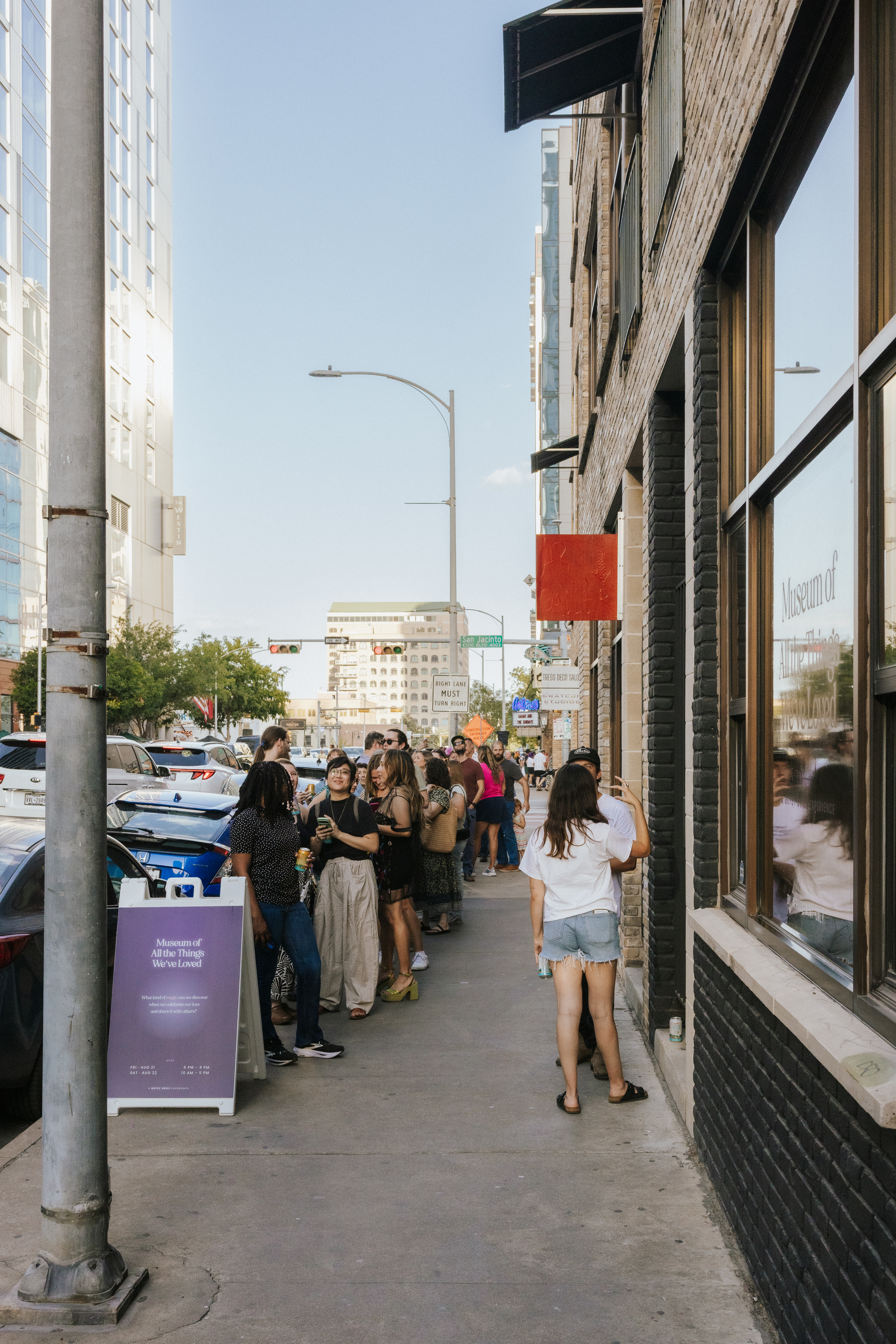
Over two days in Austin, TX, in August 2026, more than 400 people came to see personal objects connected to grief and original artwork inspired by loss, each shown alongside its story, all submitted by 30 members of the community who were courageous enough to share their story. A line stretched down the sidewalk throughout the first night, and passersby traded their bar plans for an evening at the Museum. Again and again, people in the throes of new grief found themselves in an artist's work and left a little less alone.
Opening Night. August 21, 2026.
“The Things She Left Me,” a mother's jewelry and a handwritten note for her daughter.
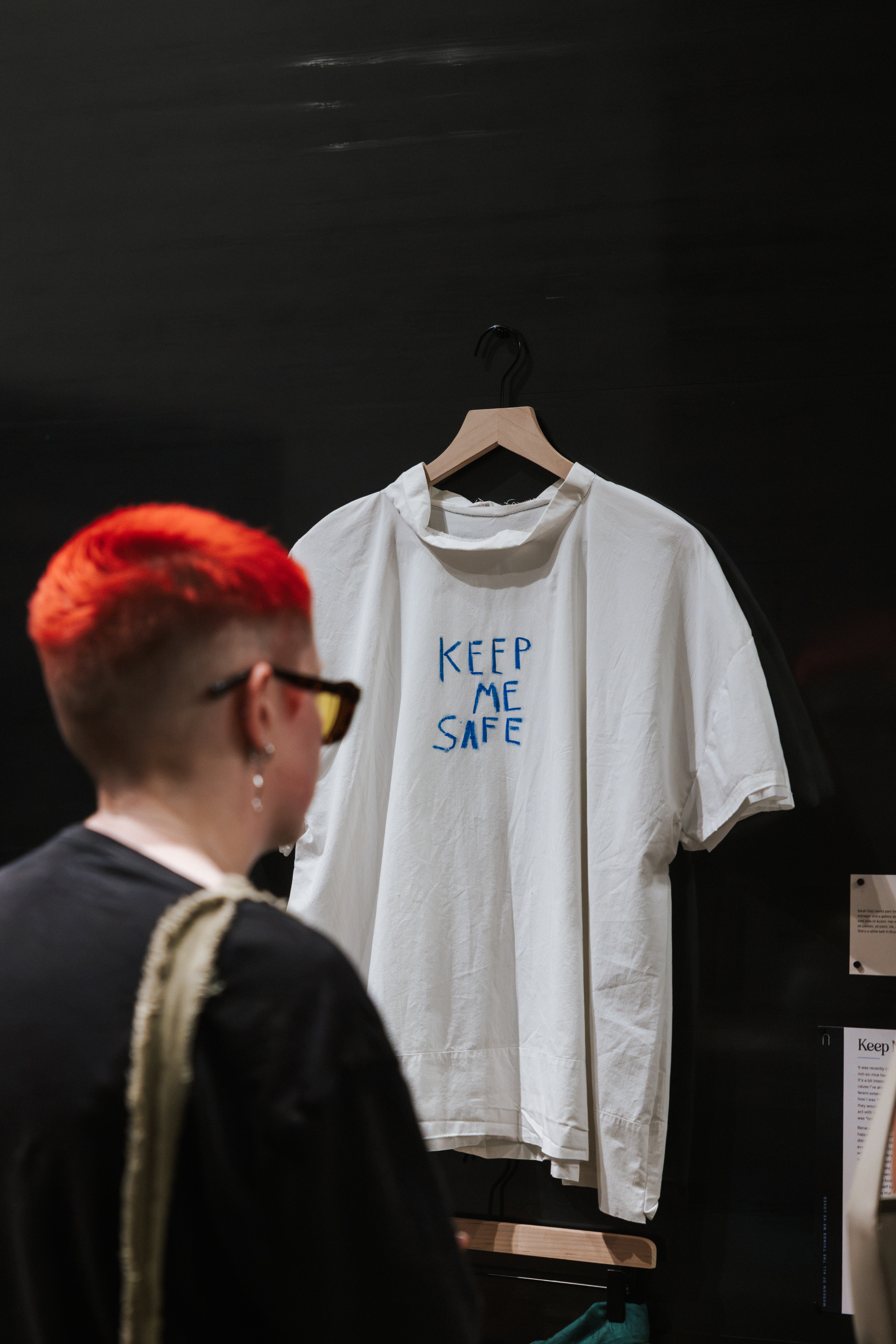
A visitor takes in an original work titled "Keep Me Safe.”
The Austin community showed up for the Museum in every way. Therapists, death doulas, and other grief practitioners attended; local businesses partnered with us, donating the venue, photography, and refreshments; and KXAN and Fox 7's Good Day Austin brought the story to the city. Together, they demonstrated that the loss that isolates us can also connect us.
Visitors gather inside the Museum.
Community Impact
During the August run, a mother who had recently lost her son to suicide introduced herself to John Jeff and shared her story. He immediately thought of two artists in the exhibit, with different stories and backgrounds, who had both lost sons to suicide. John Jeff showed her their work and, after the museum, connected her with them, remembering how much he had wished for people in his life who “got it.”
Museum visitors are immediately met with realness. They see the work and stories of real people who have faced the death of a child to suicide, the unexpected end of a marriage, and estrangement from family. They leave with the reassurance that they are not alone. In this way, the Museum builds the two things grief so often leaves us without: the language to name what we feel, and people to feel it with.
Most of all, participants expressed gratitude for being given a platform. This approach is consistent with a World Health Organization review of more than 3,000 studies, which found that the arts play a major role in promoting health and well-being.
The contributors who shared their objects, artwork, and stories in the first Museum.
Who's behind the Museum?
John Jeff Hutter is the founder and curator of the Museum of All the Things We've Loved and the author of Gutsy Grief: Turning Loss Into Self-Discovery. As curator, he facilitates storytelling, working with contributors to draw out the specific details of their stories so that visitors can recognize their own losses in someone else's. Drawing on his graduate research in Happiness Studies, he curates educational content so that visitors leave with language and tools for understanding their own grief.
The Museum is built with the Austin community. Community members contribute personal objects, stories, and original work, and the Museum's programming is developed in partnership with local practitioners and community leaders.
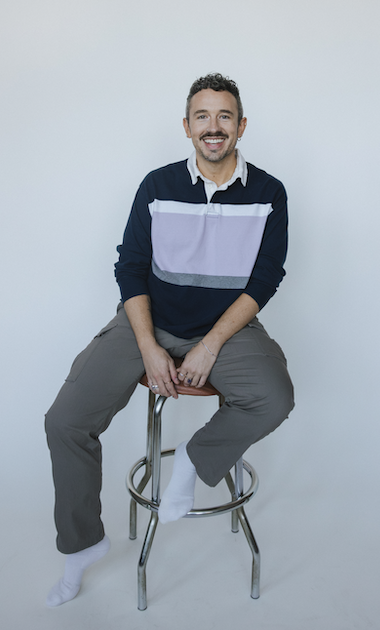
John Jeff Hutter, founder and curator of the Museum of All the Things We've Loved and the author of Gutsy Grief: Turning Loss Into Self-Discovery
The Vision for 2027
In 2027, the Museum returns to Austin for 12 weeks, growing from a two-day pop-up into a full experience. It will be built through the participation of the community it is designed to serve, and it grows from the relationships we've built with grief practitioners, organizations, and businesses.
What's new
The Museum was selected for the City of Austin's Artist Business Training Program!
New open call for submissions: objects that represent loss, or original work that loss moved someone to make.
Rotating themed exhibits throughout the 12-week run, so there's something new to discover with each visit.
Workshops, talks, film screenings, and other community events in partnership with death doulas, therapists, somatic healers, and community leaders.
Educational content rooted in happiness studies, psychology, sociology, and history.
Free community days for anyone grieving, including members of local grief support groups and the communities our partners serve.
Where your gift goes
Rent for the space
Permits and insurance
Staffing and payroll
Advertising for the opening
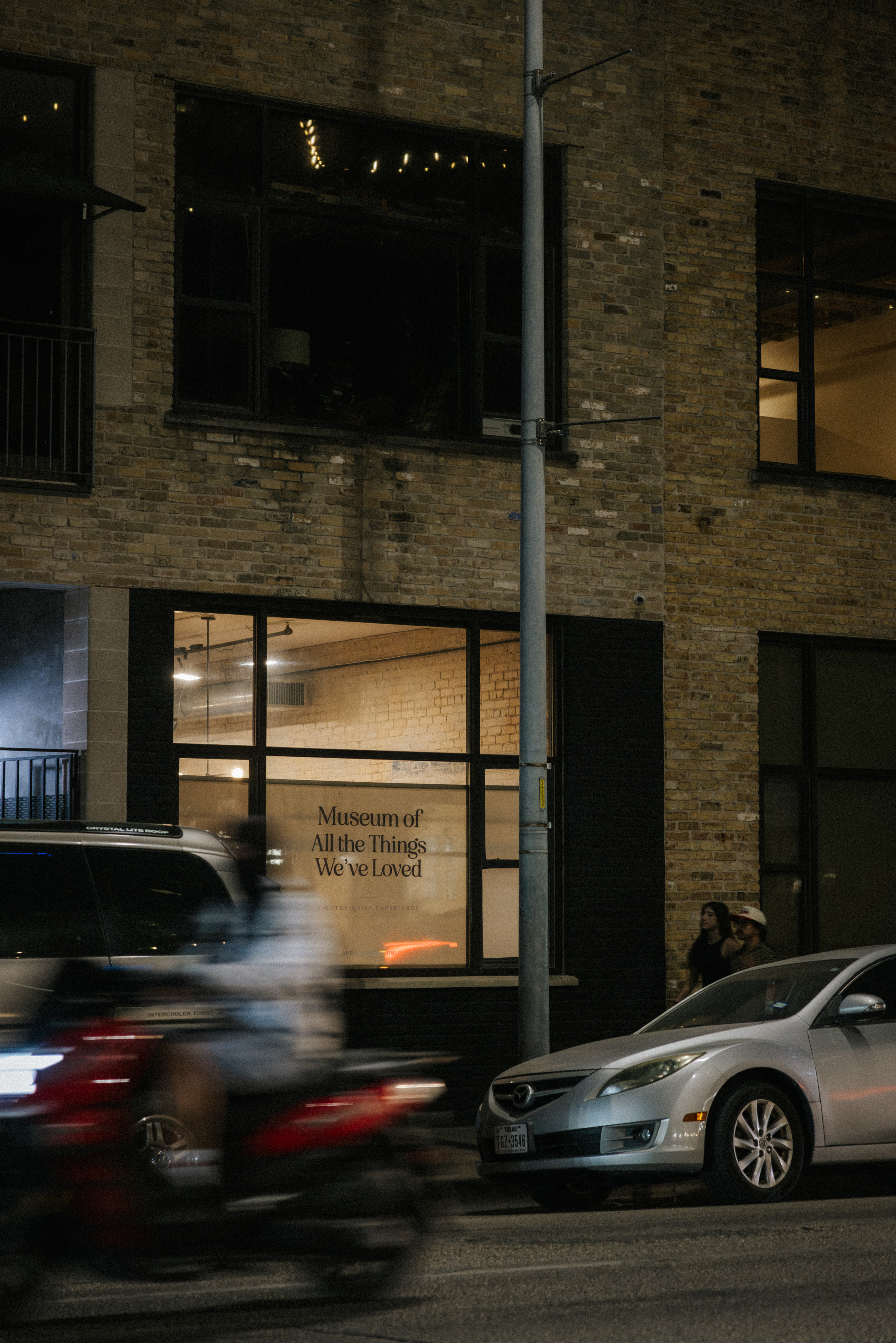
The Museum lit up on the street after dark.
Grief deserves a public place in Austin, and $50,000 opens one for 12 weeks in 2027. Your gift helps make it possible.
Every ending is an opening. Help us open this one.
If you or someone you love is struggling, you can call or text 988 to reach the Suicide and Crisis Lifeline.
Rewards
Featured
Voyager
Donate $250.00 or more
Amount over $110.00 is tax-deductible.
Every ending is an opening. Your gift helps make the Museum’s 2027 opening a reality. You get everything in Seeker, plus an invitation to preview night for two, a special evening before we open to the public.
Wanderer
Donate $25.00 or more
Amount is fully tax-deductible.
Every museum starts with someone who wanders in. Your gift helps make the Museum's 2027 opening a reality. You get your name on our digital supporter wall, plus early opening updates.
The Portal
Donate $50.00 or more
Amount over $20.00 is tax-deductible.
A ticket is the doorway. Your gift helps make the Museum’s 2027 opening a reality. You get everything in Wanderer, plus one ticket to the Museum.
Seeker
Donate $100.00 or more
Amount over $70.00 is tax-deductible.
Grief becomes lighter with community. Your gift helps make the Museum’s 2027 opening a reality. You get everything in The Portal, plus a second ticket and a Museum tote bag.
Lightkeeper
Donate $500.00 or more
Amount over $120.00 is tax-deductible.
What kind of magic is possible when we share our loss with others? Your gift helps make the Museum’s 2027 opening a reality. You get everything in Voyager, plus early entry and a guided tour at preview night.
Starmapper
Donate $1,500.00 or more
Amount over $162.00 is tax-deductible.
You're here for communal healing. Your gift helps make the Museum’s 2027 opening a reality. You get everything in Lightkeeper, plus 2 additional tickets for you or to gift to someone, and your name on The Constellation, our wall of contributors.
Nebula
Donate $2,500.00 or more
Amount over $562.00 is tax-deductible.
With community, anything is possible. Your gift helps make the Museum’s 2027 opening a reality. You get everything in Starmapper, plus a private evening at the museum for up to 20 guests.